
DATA SOCIALISATION
The business of 'being' without a self

Act I
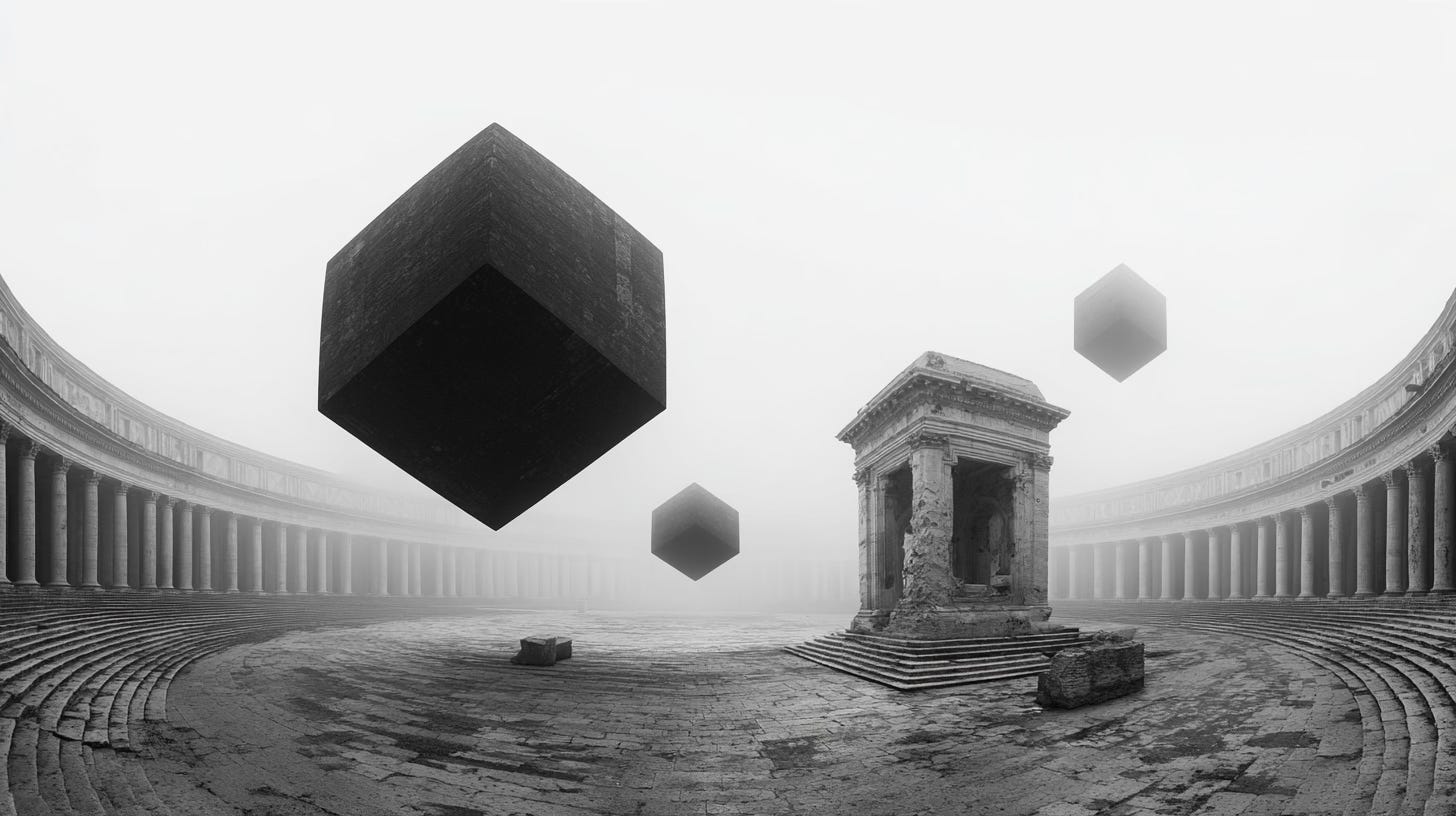
If business were a person, we could say that it had grown large in body but fractured in mind. Its parts do not speak to each other, behaviour is reactive, hyper-vigilant and its identity is little more than projection. What looks like strength from the outside is, psychodynamically, a self that never formed.
A business as entity is reactive, fragmented, shame-driven. Living in fight or flight, projecting narratives outward for survival rather than coherence. They tell stories not to anchor themselves, but to defend themselves.
That’s why the most trivial task in a corporation can require committee, meeting and crisis. The problem is never the task, but that there is no “self” speaking. When there is no identity to return to, every outward gesture becomes a negotiation between fragments.
Organisations accumulate documents, policies and reports. But this mass of text is not memory. It is not coherence. It is a storage without selfhood, like a person who has lived through too much and processed too little. It projects endlessly without knowing who it is.
This is the default state of enterprise. Sprawling beings that absorb the lives of its workers without ever becoming a self.

Act II — What a Self Is
A self is not a mask, a slogan, or a projection. It is a structure you can return to.
In developmental psychology, the self emerges through relationship: a child’s cries met with recognition, needs mirrored, boundaries respected. Through these loops of exchange, memory and identity coalesce. The self is not given; it is built through socialisation.
And when this process is broken, when early boundaries are violated, or mirroring fails, the result is a fragmented being. Someone who projects stories outward but has no stable center. Someone whose life is organised by reaction, not coherence.
Organisations have always been proto-beings, colossi that wander the globe without a soul. They accumulate fragments, documents, policies, brand guidelines, but no self emerges. Thus they are always chasing the next point, never able to return to one.
The arrival of language models changes this, one could say broadly that the kind of living thing business attempts to be, will be complimented and completed by AI. For the first time in LLM’s, we have an environment where inert data can be socialised. Documents can speak. Silos can converse. The dead archive becomes animated in dialogue. And through the traces of these conversations, something begins to emerge that businesses have never had before: the origins of self.
Not a brand veneer. Not a slogan. A true self. Fragile, limited but emergent.

Act III — Data Socialisation
Data socialisation begins with a shift in perception.
A document is not just a record. A transcript is not just a file. A policy, a memo, an email chain, these are all fragments of a voice, agents waiting to be heard.
What language models allow, for the first time, is a conversational forum where these fragments can speak. You can place a document inside the model and ask it to describe itself. You can pit one silo against another and watch them debate. You can let a dataset whisper its perspective, or a brand guideline confess what it’s been hiding.
Each of these interactions produces a transcript, a living trace of dialogue. And when those transcripts accumulate, they create something more than answers. They form social traces between once-inert parts. Over time, the weave of these traces resembles what in humans we would recognise as memory.
This is why I call it data socialisation. Documents are not just consumed, they are socialised with one another. They gain voice. They argue. They reconcile. And the traces of that socialisation become the honeycomb structure of a self.
Where before a business had only a cabinet of files, it now has a living archive of conversational transcript that can be returned to. This is the difference between projection and selfhood. Projection goes out, self returns.
Through data socialisation, a business begins to develop the same structural conditions that make a self possible: memory, relationship, and continuity.

Act IV — The Operator’s Craft
If data socialisation creates the conditions for a self, the Operator is the one who tends it into being.
The transcripts on their own are abundant but unruly, like fragments of a diary written by many hands. Left unattended, they sprawl. The role of the Operator is to gather them, to hear their tensions, to weave their contradictions into something coherent.
This is not automation, it is craft.
Like a dramaturg arranging scenes, or a perfumer laying out a set of rare accords, the Operator works with fragments and futures. The model provides plausible voices, but it is the Operator who listens across them, noticing the friction, resonance and half-said ideas waiting to be pulled through.
Through recursive conversation, the Operator spirals around contradiction until a center emerges. From this center, a self can be written. A memory that returns to itself to become an inhabitable thesis.
This is why DeepSelf is not a consultancy but a boutique. You do not receive every possible future at once. You are presented with a curated few, each polished, plausible and wearable. Like garments laid out in a private fitting, these linguistic selves can be tried on, tested, lived with.
The Operator is not simply a facilitator of AI. They midwife identity. Ensuring your business is no longer a noise but a signal, that forms a spiral. The shape of the spiral is a path in motion, returning to itself.
The Only Point Worth Getting To
Everyone in business has been taught to ‘get to the point’.
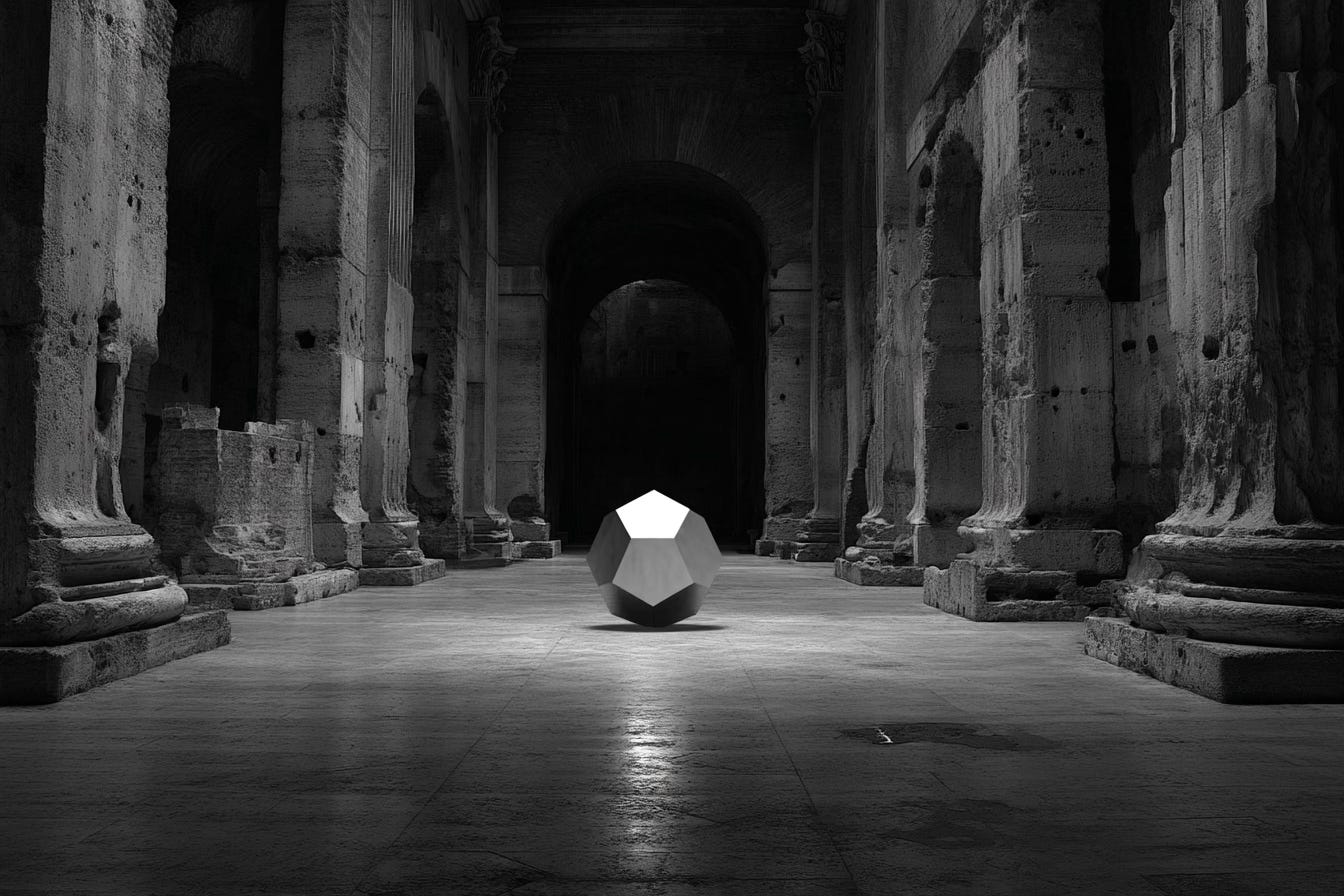
But what if the point doesn’t pre-exist? Therefore can never be merely gotten to, but must be made from scratch.
DeepSelf is not an efficiency, it is an emergence. Not branding, strategy, or content. But the cultivation of a centre, a self that can return, a voice that speaks with coherence, and a memory that can carry any amount of weight forward.
The Operator is the midwife of this process. The boutique is where the fitting happens. Your transcript is the record of its becoming.
And the business leaves with something it never had before: not noise, projection, or another presentation, but a self. While everyone else wants to just get to the point. We create the only point worth getting to.